
REGULATORY COMPLIANCE - WHY?
MAKE SAFER PRODUCTS
BUILD ETHICAL SUPPLY CHAINS
PROTECT COMPANY REVENUES
PROTECT YOUR COMPANY
The Regulatory Compliance Library is designed to help MCAA members navigate the chaotic world of global compliance and ESG.
The objective is to provide resources and guidance on how to build the programs, manage the process,
and create the necessary documentation to prove your products are safe.
2026 - WEBINAR RECORDINGS and REPORTS
2025 - WEBINAR RECORDINGS and REPORTS
COMPLIANCE TOPICS

Build America Buy America Act (BABAA)
The Build America Buy America Act, enacted as part of the Infrastructure Investment and Jobs Act on November 15, 2021, established a domestic content procurement preference for all Federal financial assistance obligated for infrastructure projects after May 14, 2022. The domestic content procurement preference requires that all iron, steel, manufactured products, and construction materials used in covered infrastructure projects are produced in the United States.
California Proposition 65
Proposition 65, officially known as the Safe Drinking Water and Toxic Enforcement Act of 1986, was enacted as a ballot initiative in November 1986. The proposition protects the state’s drinking water sources from being contaminated with chemicals known to cause cancer, birth defects or other reproductive harm, and requires businesses to inform Californians about exposures to such chemicals.
ISO 9001
ISO 9001 is a globally recognized standard for quality management. It helps organizations of all sizes and sectors to improve their performance, meet customer expectations and demonstrate their commitment to quality. Its requirements define how to establish, implement, maintain, and continually improve a quality management system (QMS).
Implementing ISO 9001 means your organization has put in place effective processes and trained staff to deliver flawless products or services time after time.
ISO 14001
ISO 14001 is the internationally recognized standard for environmental management systems (EMS). It provides a framework for organizations to design and implement an EMS, and continually improve their environmental performance. By adhering to this standard, organizations can ensure they are taking proactive measures to minimize their environmental footprint, comply with relevant legal requirements, and achieve their environmental objectives. The framework encompasses various aspects, from resource usage and waste management to monitoring environmental performance and involving stakeholders in environmental commitments.
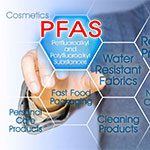
PFAS – New & Expanding Requirements
PFAS are man-made chemicals that have been used in industry and consumer products worldwide since the 1940s. They have been used to make nonstick cookware, water-repellent clothing, stain resistant fabrics and carpets, some cosmetics, some firefighting foams, and products that resist grease, water, and oil.
The most commonly studied PFAS are perfluorooctanoic acid (PFOA) and perfluorooctane sulfonic acid (PFOS). The next most commonly studied are perfluorohexane sulfonic acid (PFHxS), and perfluorononanoic acid (PFNA). PFOA and PFOS have been phased out of production and use in the United States, but other countries may still manufacture and use them.

REACH – SCIP
The REACH Regulation aims to:
– ensure a high level of protection of human health and the environment against harmful substances
– assess the safety of chemical substances in use in the EU
– promote innovation and competitiveness
– promote alternative (non-animal) methods for the assessment of the hazards of substances
RoHS – WEEE
The RoHS Directive aims to prevent the risks posed to human health and the environment related to the management of electronic and electrical waste. It does this by restricting the use of certain hazardous substances in EEE that can be substituted by safer alternatives. These restricted substances include heavy metals, flame retardants, or plasticizers.
The Directive promotes the recyclability of EEE, as EEE and its components that have become waste contain fewer hazardous substances. At the same time, it ensures a level playing field for manufacturers and importers of EEE in the European market.
TSCA – Toxic Substance Control Act
The Toxic Substances Control Act of 1976 provides EPA with authority to require reporting, record-keeping and testing requirements, and restrictions relating to chemical substances and/or mixtures. Certain substances are generally excluded from TSCA, including, among others, food, drugs, cosmetics and pesticides.
TSCA addresses the production, importation, use, and disposal of specific chemicals including polychlorinated biphenyls (PCBs), asbestos, radon and lead-based paint.

US & European Union Conflict Minerals
The EU regulation directly applies to companies that import tin, tungsten, tantalum and gold minerals and metals into the EU, no matter where they originate.
Business Continuity for
Supply Chain
Global Battery Legislation

Global Packaging Legislation
ISO 17025

ISO/IEC 80079-34
ITAR Compliance Requirements
PED

Regulatory Tools & Templates
ITAR Compliance Requirements
NEC/CEC
PED
Regulatory Tools
and Templates

Safety Data Sheets – GHS
USMCA – The New NAFTA

Uyghur Forced Labor Prevention Act

Worldwide Anti-Trafficking Laws

Supplier Code of Conduct
CONTENT CONTRIBUTOR
Kelly Eisenhardt
Co-Founder, Managing Director
BlueCircle Advisors, LLC

Kelly Eisenhardt | Co-Founder, Managing Director
BlueCircle Advisors, LLC
